Compost Toilets for RVs, Homesteads, and the World!
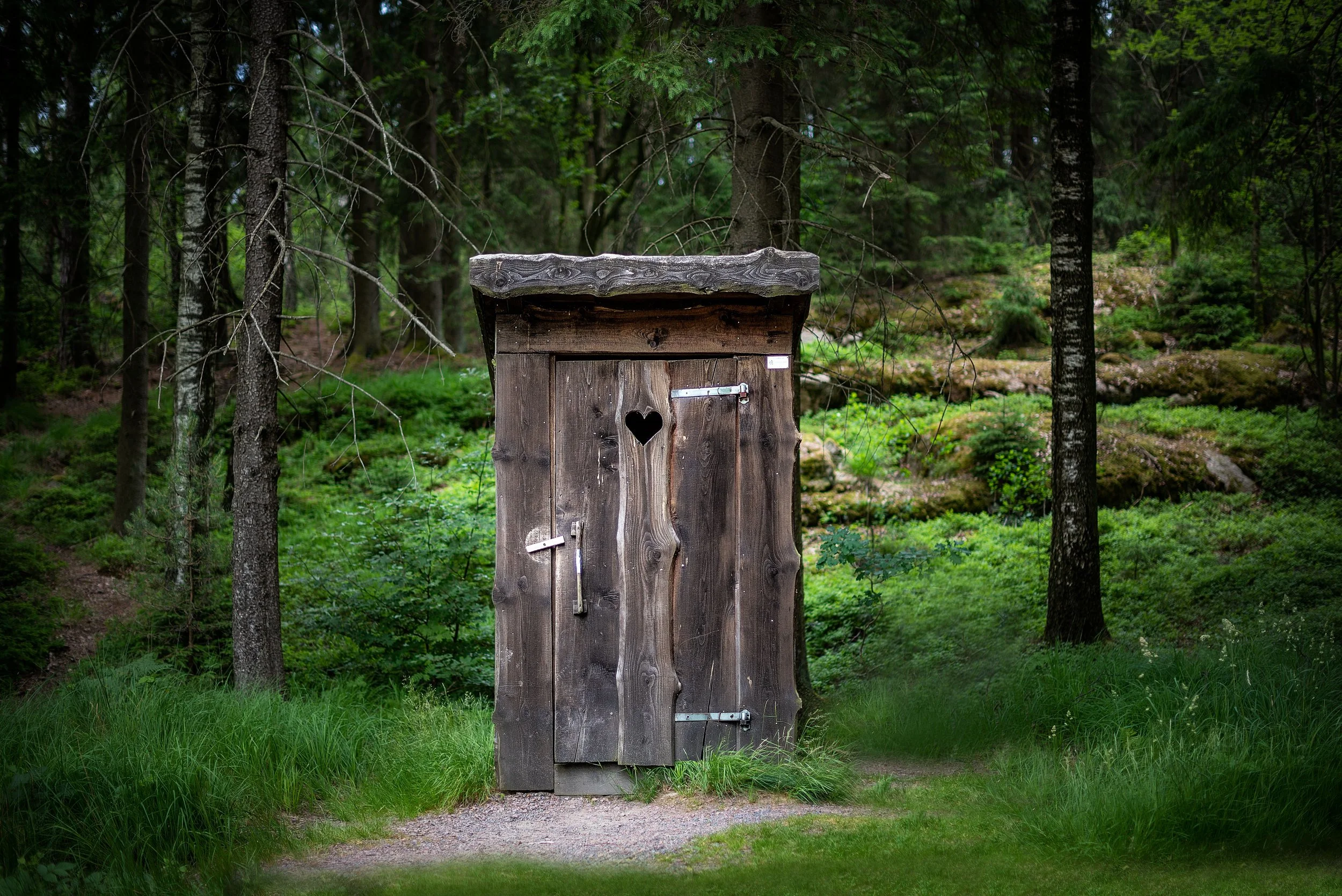
If you’ve read through my site, you may have noticed I like talking about toilets. It’s weird, but it’s not my fault. A funny thing happens to you when you become a full-time RVer, especially a boondocker. Suddenly you are responsible for all your inputs and outputs, hauling around water and waste in tanks, constantly monitoring your levels and needs, unlimited resources no longer flowing freely through unseen pipes without thought.
Uncomfortable though it may seem, this new awareness of what our amazing/disgusting human bodies use and produce on a daily basis is good for us. Yes, indoor plumbing is a modern marvel and being in awe and grateful for the systems our society has created is a great place to start. But as we gravitate more and more towards frictionless convenience, these systems deviate away from nature and the simplest path.
Flushing toilets and their corresponding municipal wastewater treatments are a good example of this. They seem very convenient, but in fact are part of an inefficient, broken system.
10 Reasons Why Flushing Toilets are Terrible:
You’re shitting in drinking water
Constant threat of clogged and leaky pipes
Cleaning the bowl
Flushing sounds
Danger of getting your head shoved in it if you’re being bullied in a 1990s high school movie
When you have company and have to flush twice and everyone knows your secrets
Splashback
Stuff can fall out of your pockets as you sit down and get all wet and gross
When the toilet doesn’t flush and you have to take the top off and wiggle that thing in the tank over and over
860 billion gallons of untreated sewage spill into American waterways every year, from failing or overflowing infrastructure
Some of these are me being a silly goose, but let’s take a look at the first and tenth reasons.
#1 is the most egregious to me as I live in the American West, a place of widespread drought and lots of handwringing about how to conserve water. When 30% of household water goes to flushing toilets, looking for a new residential solution seems like a no brainer.
Not to mention, when disaster strikes, the last thing you want to use precious water for is flushing a toilet. This story from when tropical storm Helene devastated Asheville highlighted a woman’s struggle to ration potable water between herself and her toilet. This should be a complete non-issue, not life or death.
And as for #10, people balk at the idea of doing anything with their waste besides flushing it, but live in a world where 80% of human wastewater enters the waterways and environment completely untreated. Guys, it’s already gross out there! What if we took responsibility for our own waste instead of letting it run downstream?
The Dao of Dumping
A compost toilet is the ultimate simple, self-sufficient system. Here’s how it works:
Get a 5 gallon bucket
Go to the bathroom in it
Cover your waste with a biodegradable material, such as sawdust
Empty bucket contents when full into a compost pile
Harvest rich, pathogen-free compost in a year
This creates a closed-loop system where our waste becomes a beneficial material for a healthier environment rather than a toxic byproduct. Daoism teaches us to live in accordance with nature, following the incredibly efficient and miraculous processes of the world. A flush toilet forces waste through an energy and water-intensive, chemical-laden treatment system far away, whereas a compost toilet simply lets nature do what it already does by decomposing organic matter back into earth.
This also creates a meaningful cycle and reinforces the fact that humans are a part of nature and what we naturally output can return to its source. The resulting compost can be used to grow food (both unprocessed ‘night soil’ sewage and fully composted humanure have been used on crops around the world for centuries), but even if it's not, it’s still a simple way to save water, improve soil, capture CO2, and grow non-edible plants.
Compost toilets can also simplify our everyday lives by removing the use of pipes that can get clogged and require expensive maintenance. As we see on a larger scale around the world, sewage infrastructure is a perfect example of how the more complex the system, the more ways it can fail. Why not use something that is simple, affordable, and natural?
Most importantly, think of a world without toilet bowl skid marks!
How to Do It Right
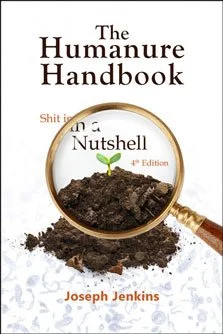
Now, of course, this process raises a lot of questions and there are some caveats to make sure you’re actually composting and not just dumping a pile of poop somewhere. To address all of these in detail, I highly recommend THE source on compost toilets: The Humanure Handbook. It’s written by the very cheeky Joe Jenkins, who has been using a compost toilet since 1976, heavily researched this topic as part of a graduate thesis, and has traveled the world teaching others how to build and use their own composting systems.
So I will very briefly cover the basics, but if this interests you at all (or you feel very outraged), I urge you to read The Humanure Handbook.
Ew!
It’s okay if this is your first reaction. Many societies and people across the globe have what Jenkins calls ‘fecaphobia.’ They are scared of something that comes out of their own butt daily, sort of like a dog who doesn’t recognize his own tail and tries to fight it. We are conditioned to treat human waste as at worst a taboo and at best a joke. The reality is human output, like other animal manure, has the potential to be a valuable resource that completes a natural cycle of replenishment.
It may seem like a silly topic if you’ve never had to worry about safe sanitation, growing food, or upkeeping infrastructure. But if we want to become accountable and more involved with how our world works instead of taking for granted that these systems will always be there and functioning, this is something to think about.
But isn’t this highly unsanitary?
The number one concern about creating humanure is the fear of harmful pathogens. Jenkins goes into a very deep dive about microorganisms and pathogens in his book, but the bottom line is that composting kills disease organisms. It can do this in two ways: In an active compost pile that reaches 115–150°F, pathogens (bacteria like E. coli and salmonella, parasitic eggs, viruses) are killed by temperature. This requires a pile large enough to sustain heat in its core and support thermophilic bacteria that kill pathogenic microorganisms.
The second way is through time. Even without high heat, pathogens die off through biological attrition. We have organisms adapted to living inside a human gut and outside that very specific environment, competing microbes, pH changes, drying, and UV exposure gradually overwhelm them. Given enough time (ideally two years for cold composting) the pathogen load drops to safe levels on its own. With either of these methods, humanure will become safe enough to use on food crops.
On a large scale, if we’re collecting waste from thousands or millions of people in a city, we don’t know what pathogens, pharmaceuticals, and industrial chemicals might be in that stream. But when it comes to your own personal humanure, you’re going to have a much better idea what you’re working with. Are you seriously sick? Is your family sick? Healthy people aren’t outputting significant disease organisms in their waste. You still want to make sure you’re processing compost correctly to kill normal pathogens, but done on a small, personal scale, you can be confident about the benefits of what you are putting back into the soil.
Part of the process of managing a compost toilet is emptying the bucket into a compost pile. This is the part people tend to be most squeamish about, with one armchair critic warning about “the inevitable direct exposure from carrying, emptying, and washing buckets.” Jenkins addresses this concern: “Wiping one’s butt after defecating requires more ‘direct exposure’ than emptying compost, but I would not discourage people from doing it.”
The reality is that emptying a compost toilet is surprisingly unoffensive, with low to no odor and visually just a bucket of sawdust.
Doesn’t it smell?
Compost toilets definitely smell if not managed right. However, the management required is just adding more cover material until it stops smelling. Cover material can be coco coir, peat moss, sawdust, or any finely shredded plant material. Sawdust seems to be the cheapest and most accessible option and works as a perfect biofilter that blocks out odors. If the toilet smells, add more cover material, simple as that. There can be some fine tuning involved when you first start using your toilet, like making sure the cover material is small enough and has some residual moisture that kickstarts the bacteria in the material (leaving sawdust out in the rain or misting it slightly will accomplish this).
The only smell that should be emitting from a compost toilet or pile should be that of the cover material or a slightly earthy, mild aroma.
Should I get a fancy compost toilet?
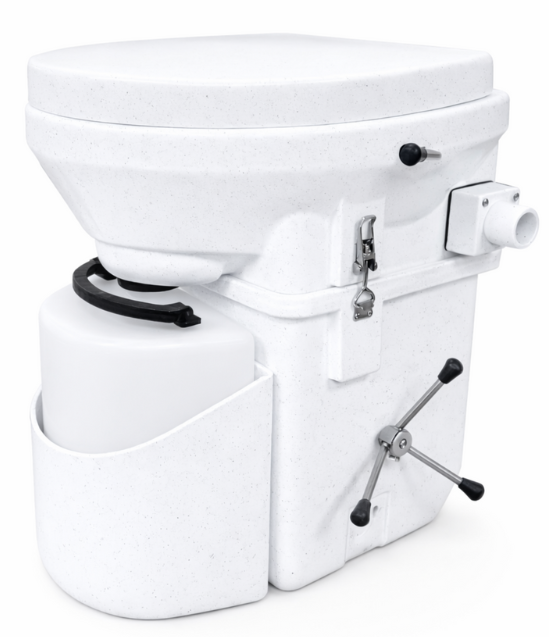
When I first started looking into compost toilets for our RV, the main options I saw over and over were Nature’s Head and Air Head toilets. Both of these brands work similarly in that they divert urine into an attached bucket and the solid waste is dried out and mixed into the cover material in a holding tank. They also both cost an eye-watering $1,000. Sure, in every forum thread I read about one of these, there was a person who would pop in and comment ‘just use a bucket!’ But I thought to myself, ‘I can do better than that.’ So I got a Nature’s Head and it worked well.
But, as I continued to learn more about humanure, I ultimately realized that a bucket would, in fact, work just as well, cost next to nothing, and be a simpler process. The thing is, you can’t make a lot of money just selling poop buckets. So we have these over-engineered hunks of plastic, with some other even more complicated brands involving electricity, because THEN you can sell a toilet for one or two thousand dollars.
However, all that said, for some vehicle nomads, a fancier setup with urine diversion might be appropriate, especially if you have a black tank that you can attach the toilet to, so that the urine can be dumped en masse less frequently. The dried out solid waste also requires less frequent dumping than a regular 5-gallon bucket (up to two weeks vs 4-5 days for 2 people).
Compost Toilets for RVers, Vanlifers, and other Vehicle Nomads
Now, vehicle nomads might notice one issue with using a compost toilet… of course we can’t carry a compost pile with us. We can’t complete the full system and return our waste to the earth in a productive way. However, I still think a compost toilet is superior to a black tank system (or no system at all, if you’re in a smaller rig).
The only difference for a roaming setup is to put a bag inside your toilet and throw out the contents when full (just as you would a diaper). It lacks the full environmental benefits, but still offers an easier and cleaner chore than dumping the black tank. Plus, it’s generally easier to find a trash can than a dump station.
Another benefit is that if you have both grey and black tanks and are no longer putting solid waste into your black, you can combine the two to greatly increase your water capacity by opening all the tank valves and installing a secondary twist-on gate valve at your main sewer outlet.
Some vehicle nomads bury their waste instead of trashing it, which if done right, can provide that same environmental benefit, but I don't necessarily recommend this, as you would absolutely have to make sure you’re burying a deep enough hole, far enough away from water, in a place where it’s legal to do and so on. The material in your compost toilet is NOT compost until it has sat long enough or in hot enough temperatures to be processed by microbes.
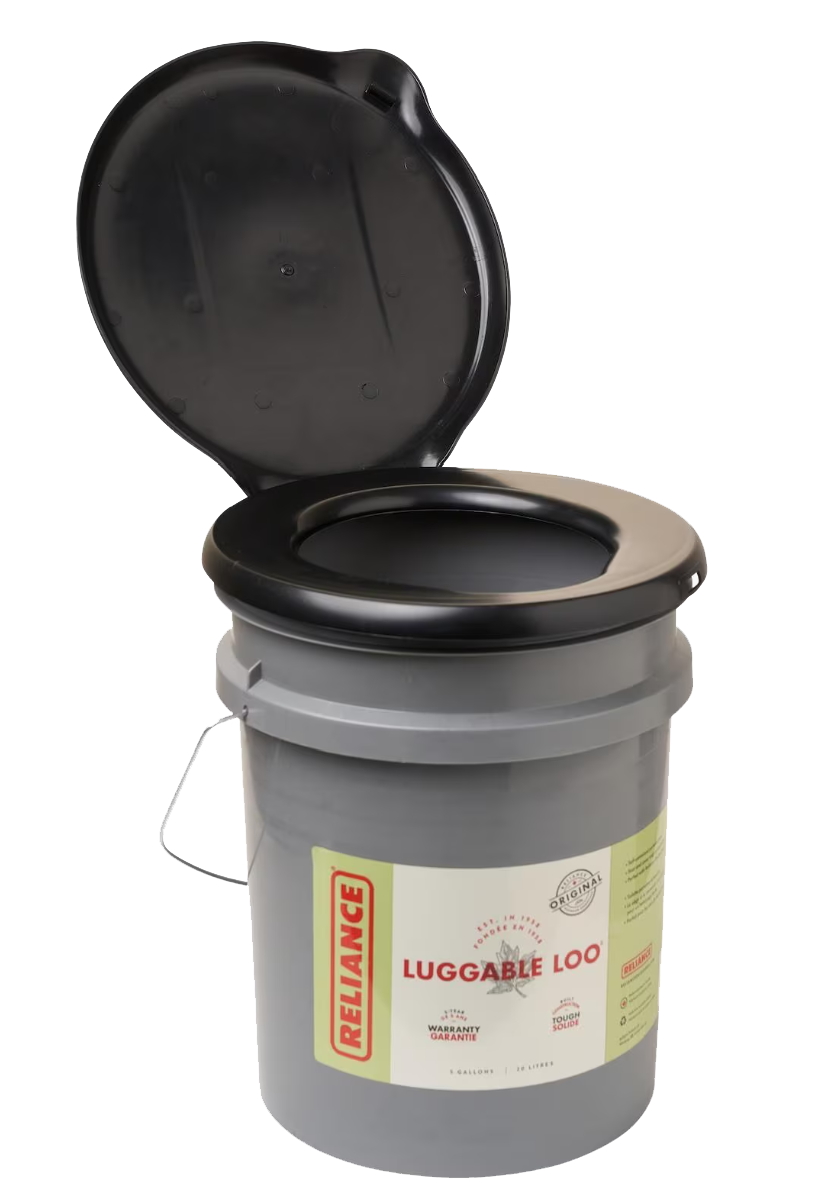
The simplest and cheapest way to try out a mobile toilet is some version of The Luggable Loo, which is just a bucket with an attached toilet seat that you can either add a bag to or not.
Compost Toilets for Homesteaders
If you have a little space of your own, you’re lucky enough to be a part of this process from beginning to end. Before you begin composting humanure, I recommend getting the hang of composting in general and learning the basics so you can be sure you’re managing a humanure pile correctly.
People I know who also live in rural areas express concern about the presence of bears or other animals that have gotten in their compost in the past or make them wary of starting a pile. The truth is, when done properly, compost should not attract animals because it doesn’t smell. This can be a tricky balance to find, however, and it takes some practice and observation of your pile.
Compost is made up of:
Carbon-rich materials: also called ‘browns’ and includes dry plant matter, straw, and shredded cardboard, egg cartons, and non-glossy, uncolored paper products.
Nitrogen-rich materials: also called ‘greens’ and includes food scraps, fresh yard and plant trimmings, coffee grounds, and crushed eggshells.
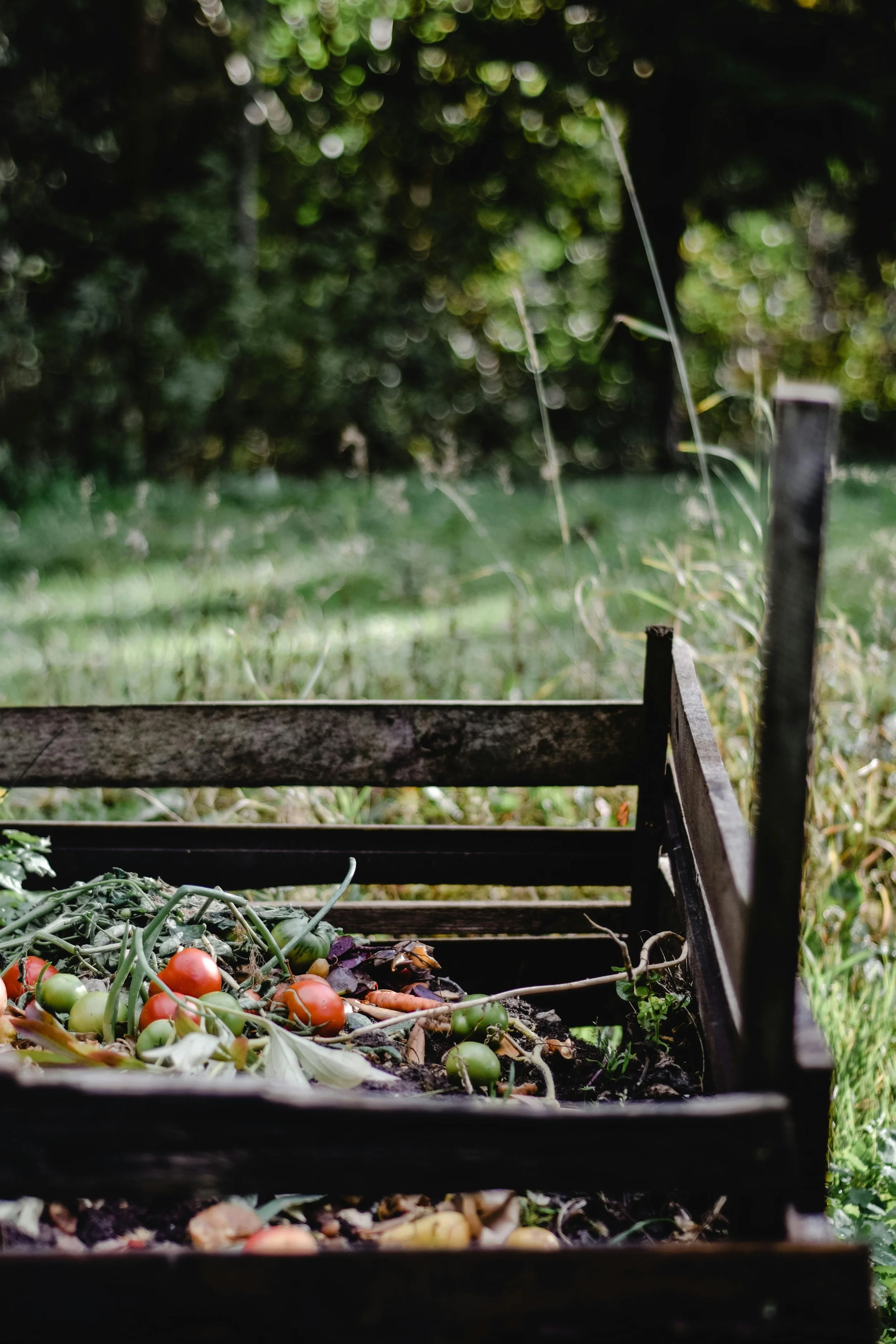
Balance carbon to nitrogen 2:1 (or 3:1 in bear country) and keep the compost watered enough to be damp but not wet. The carbon is what keeps compost from being just a rotting pile of food. It reduces odors and dries it out.
A lot of conventional composting wisdom says meat and dairy products should not be composted, but Jenkins has found in his own practice that just about anything organic can be composted, including whole animal corpses, pet waste, and even old beer. If you are struggling with wildlife by your compost, removing meat from your compost practice might be helpful.
How your own compost pile works best will depend on where you live and how you tend to it. Does it rain a lot or do you need to make sure your compost doesn’t dry out? Are the items in your compost in small enough pieces to break down easily? Does it need to be turned more or less? What works for one person may not work for you, so think of your compost pile as a personal experiment of your output and environment.
The same principles apply to a humanure pile, which will include all the things you normally would compost. Poop and urine are both nitrogen sources and the cover material used in the toilet counts as carbon. Since it requires plenty of cover material, like sawdust, to eliminate odors and excess moisture in the toilet itself, it’s pretty effortless to get that 2:1 ratio.
The toilet is emptied into a hole dug into the middle of the compost pile, then covered with more cover material (generally straw). Burying kitchen scraps in this way also deters animals. Once again, enough of the cover material will keep your pile from smelling. An added bonus is that bears are repelled by the scent of ammonia, which is abundant in urine, so though your pile may not smell to you, it will likely keep bears away.
A long compost thermometer will tell you if your pile is getting hot enough to kill off pathogens. It needs to reach a certain mass (generally 3’x3’x3’) and have enough nitrogen to start heating up. The subreddit r/composting reads more like a fetish site than a gardening site, considering how obsessed everyone there is with urine (nitrogen, remember!) and peeing on compost.

These are just some of the quick basics of backyard composting. For more information, you can check out this crash course, read the Humanure Handbook, or check the plethora of information online. There’s a lot of misinformation (and fear) about humanure online, but if you can find niche forums like Permies, you can read discussions from people who have years of experience with these systems.
A compost toilet is always a terrific way to conserve water, especially if you’re on a well or haul your water in. For managing the end compost product after a year or two, if you’re unsure if you successfully killed all the pathogens, you can simply use it on non-edible plants or to enrich the soil of your environment.
Compost Toilets for the World!
When I visited India, I was surprised to find PSAs in the airport, instructing people on the importance of using designated bathrooms, instead of defecating in open trenches or on the side of the road. Illness from exposure to untreated sewage is a major issue in India and other countries that struggle with broken waste infrastructure and a lack of toilet access. According to the WHO, “over 1.5 billion people still do not have basic sanitation services, such as private toilets or latrines…..of these, 419 million still defecate in the open, for example in street gutters, behind bushes or into open bodies of water.”
A compost toilet is a cheap, quick, and easy solution to this sanitation crisis that millions of people face. A family could add one to their home with virtually no installation costs and no added pipes. It wouldn’t matter how rural their home is or how much water they have access to.
Non-profits have already been bringing safe sanitation through composting to countries around the world:
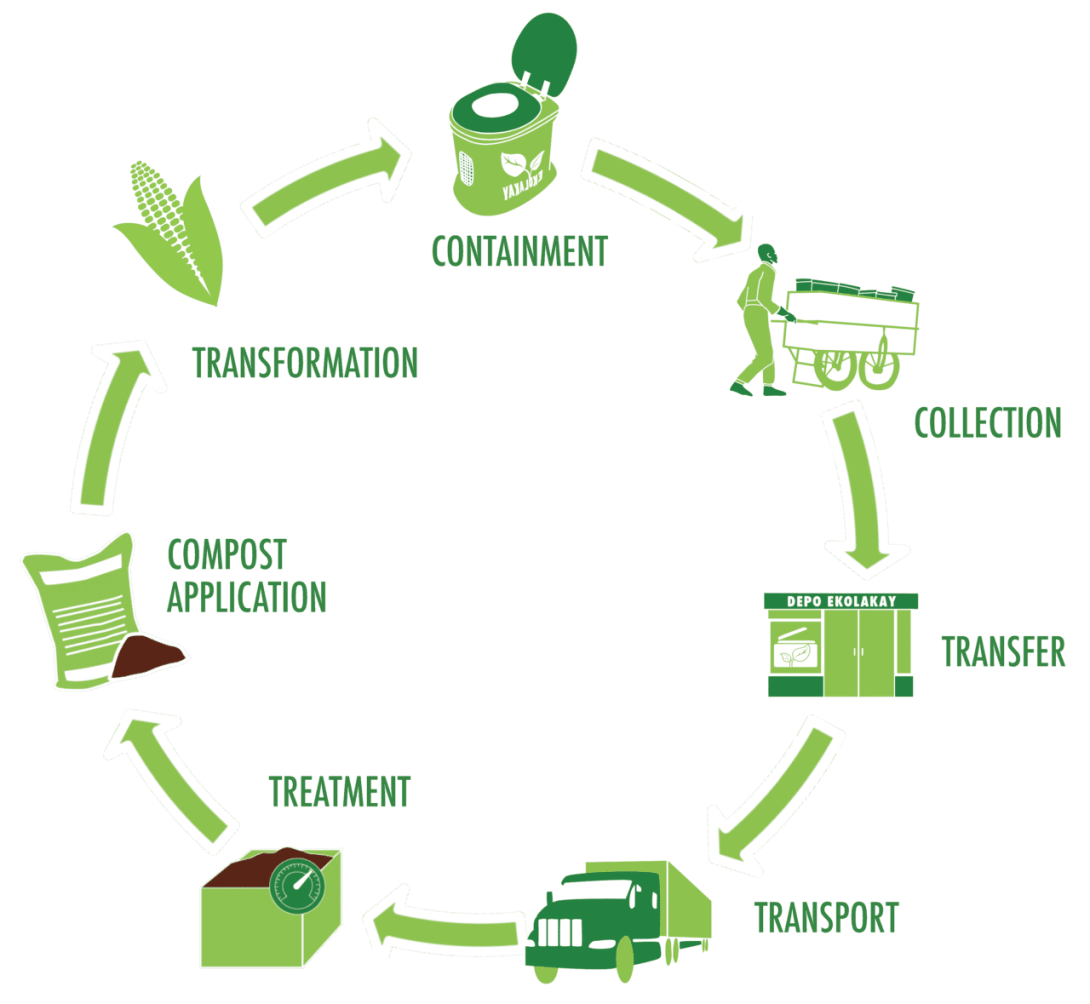
Soil Haiti provides container toilets to urban communities, then collects the waste and “transforms it into compost which is sold to support agriculture, reforestation, and climate change mitigation efforts.”
In Mongolia, local activists work to replace leaking pit latrines with dry toilets and break down toilet taboos.
Patricia Arquette’s NGO, GiveLove, brings ecological sanitation to communities, schools, and prisons around the world and encourages them to reclaim humanure “for re-use as fuel, fertilizer, and fodder.”
Toilet Equity, in Grand Junction, CO provides local unhoused people with public compost toilets that are emptied by volunteers. They even test the results of their composting piles to show how finished humanure is safe and beneficial.
These programs prove that compost toilets have a use anywhere in the world, even if individuals don’t have space or the ability to have their own compost pile. The privileged few in the world who can go to the bathroom without a single thought to their comfort, ease of access, or health may struggle to see what a revolutionary option compost toilets provide for so many. They are radical in their low-tech simplicity and offer solutions to drought, public health, budgets, and more.
Humans are not simply observers, managers, or destroyers of nature. We are expressions of it, the same as rivers and decomposing leaves and mycelia. Daoism doesn’t make a distinction and neither should we. The discomfort that arises around the idea of humanure is a modern one that accompanies the story we tell ourselves that humans are somehow separate from all the incredible natural processes around us. Labeling our own outputs as taboo further others humanity from the environment. It’s obvious that we need to reconsider how we interact with our world. Why not start from the bottom?